Technology helps older adults live independently

By Jay Nachman
Technology can help keep older adults safe, secure and independent.
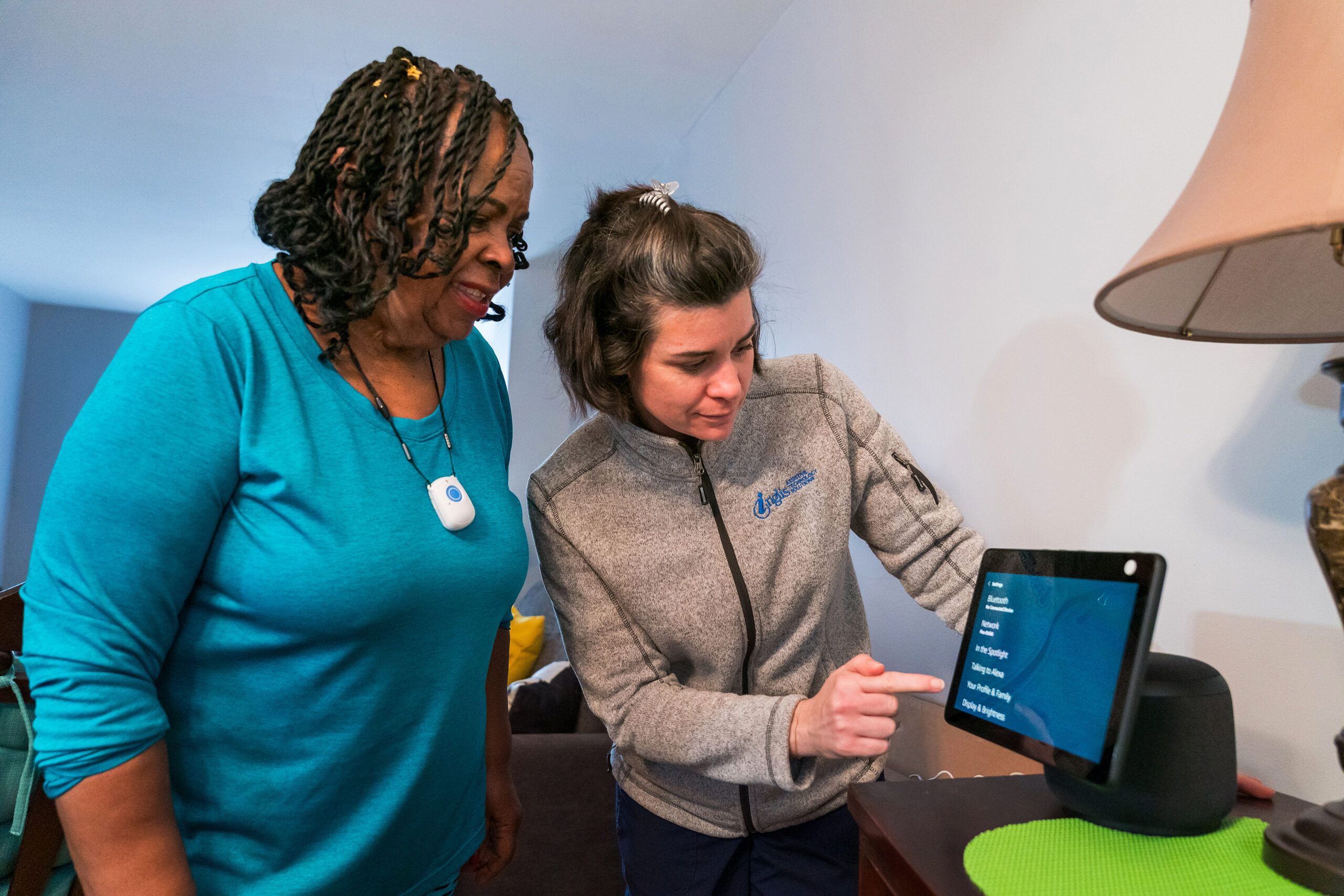
That’s been the experience of West Philadelphia resident Gloria Pemberton, 80, who uses an Amazon Echo Show smart device.
Pemberton is comforted “knowing if there is a trip or fall, I can use this to call out to somebody. If I have to get downstairs at night, I can use my voice to turn on lights.”
Pemberton received the Echo Show from Katie Griffiths, an assistive technology solutions specialist at Inglis, a nonprofit organization in Philadelphia providing services to improve independence for people living with disabilities. Inglis provides services and products to maximize the independence of adults with physical disabilities living alone in Philadelphia neighborhoods and those who live in the organization’s long-term, residential care community.
When an older adult requests technology assistance from Inglis, the organization first sends a specialist to a resident’s home to do an evaluation of what they have and what they need, according to Griffiths.
After providing devices, a specialist helps the recipient to manage them. Many older adults are nervous about using smart home features or “always listening” devices. “We get to really help and educate,” Griffiths said.
Through a grant, Pemberton was able to get her old iPad upgraded. With the upgrade, she is able to connect with friends and family through video conferencing apps, emails and text messages. She was also able to get a new MacBook computer.
Pennsylvania sees assistive technology as an important way to help people stay safe and independent at home as they get older. The state has a grant program that may help pay for devices. Some older adults may also get help paying for devices and tech support through Medicaid, managed care plans or other grants.
“I didn’t realize that my computer was really old,” Pemberton said.
“I use this new technology every day, including taking a Drexel class. I log on for Zoom meetings with community concerns, and I need my electronics for zoning meetings. Two neighbors come over to use my computer with me on meeting days since they don’t have one. I have spread the word to neighbors who have used Inglis’ services, too. I am so grateful.”
She also uses the computer to pay bills and post photos on Facebook.
For other residents, Inglis has installed smart lights, doorbell cameras and smart display devices as hubs to integrate it all.
“Smart home integration is key to creating an environment that truly supports older adults and people with disabilities in their everyday routines, and helps to maintain their independence,” Griffiths said. “Inglis meets with each participant regularly to ensure that they can confidently use the technology on their own. It’s important to the Assistive Technology Solutions team that everyone we support feels comfortable enough to reach out when they have questions, something breaks or a device needs an update in between scheduled follow-ups.”
An Inglis team member also can teach residents about account management. Some older adults have iCloud, Gmail and Amazon accounts but they don’t know their passwords. Some may not know how to connect to their Wi-Fi.
Inglis experts also teach digital safety and security. “Scam prevention education is so important,” Griffiths said.
They will explain what a robocall is and how to detect one, what scam texts look like, and how to spot phishing emails or phishing links online.
“Technology is becoming an essential tool for helping older adults remain safe, connected and independent at home,” said Dyann Roth, president and CEO of Inglis. “As demand for accessible housing grows, innovative and accessible technologies can expand choice, strengthen independence, and help people age where they want to be — in their own communities.”
To seek assistive technology devices or training from Inglis, older adults can call 215-581-0767. An assistive tech specialist will schedule time to discuss the application process, learn more about your daily routine and schedule an assistive technology assessment.
Jay Nachman is a freelance writer in Philadelphia who tells stories for a variety of clients.