
Smart design: A bright idea for aging in place

By Jay Nachman
“Aging in place in a home of choice in the community is the preferred living disposition of older adults as they grow older and is linked to better quality of life and overall health and well-being,” said Monique Chabot, Ph.D., associate director of assistive technology at Temple University’s Institute on Disabilities.
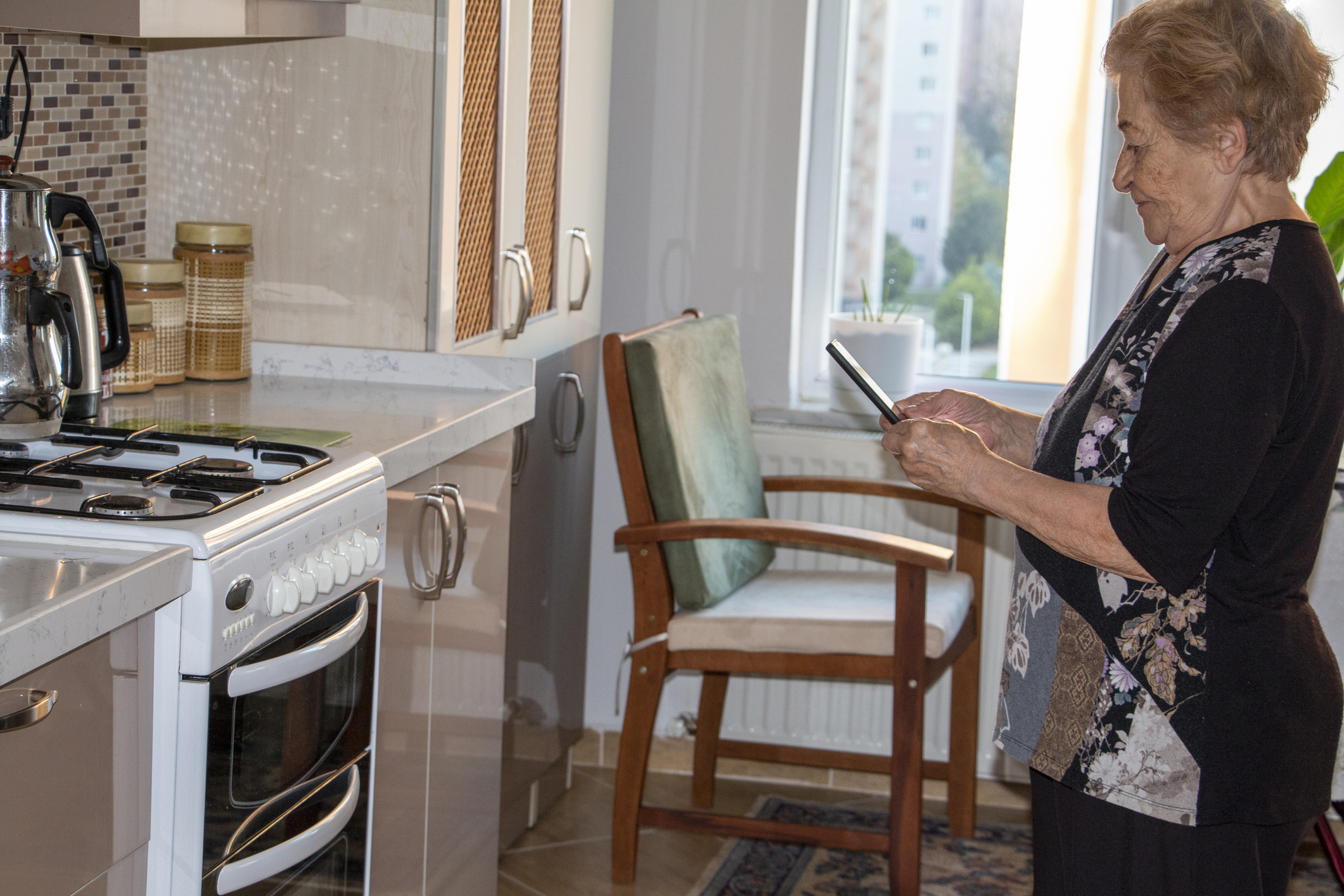
Smart design and technology can aid older adults in the kitchen by improving safety and helping them make healthy meals. Design encompasses organization, placement and flow. Smart technology refers to electronic devices that are connected through the internet. These devices help improve convenience and efficiency.
You do not have to remodel your entire kitchen or purchase expensive appliances to improve the design and efficiency of your kitchen and cooking methods.
Smart design
According to Chabot, who holds a doctorate in architecture and design from Thomas Jefferson University, smart design can help in the kitchen by “reducing physical demands so you’re less likely to get out of breath. You might not have to do as much movement. You don’t need as much strength to do things.”
Assistive technology is anything that helps an older adult in daily life. “It doesn’t have to be special to be labeled as tech,” she said.
Certain brands design their products to be ergonomic, meaning that they reduce discomfort, fatigue and injury. Examples include large labels that help shoppers make the right product choice. Some plastic bags have easy-open tabs. Some utensils and gadgets have bigger, softer or more comfortable handles/grips.
Ergonomically designed products can really help someone who is older and experiencing arthritis or other issues with limited hand dexterity, Chabot said.
Having good storage, with the ability to see and reach everything, is important. Poorly designed kitchens create risks for falls.
“The extra effort and frustration in trying to reach things drains brain energy,” Chabot said. “Anytime you drain brain energy, that’s less than you have to make sure you are safe in the kitchen. It can lead to accidents.”
Chabot noted that kitchens are set up in a way that makes construction easier. But when using their kitchens, older adults should think about functionality. Chabot suggested asking yourself, “Do you have pull-out drawers? Do you have the ability to get things easily out? Do you have items clustered in areas where you are most likely to use them? (Or do you) have to go clear across the kitchen to get an ingredient, spoon or bowls?”
An efficiently designed and well-organized kitchen makes cooking easier and safer. “Then you are reducing the amount of energy you are spending. You’re more likely to make your meals and to be able to do it safely,” Chabot said. “And you are more likely to continue to do it because it doesn’t drain you as much cognitively or physically.”
These changes allow older adults to remain independent longer.
Smart appliances
Smart technology can compensate for vision or hearing loss and cognitive decline. “It can also help with cognition, so you don’t have to remember to do things. It also keeps an eye on the safety of what’s going on. If something’s going on accident-wise, it can help circumvent that,” Chabot said.
You may have seen commercials for smart appliances with features that integrate with a smartphone. Here’s an overview of some options that are available. Although currently expensive, these products may come down in price over time and become more widely used.
A smart refrigerator can monitor the food inside. This means it can create a grocery list and send it to a shopper’s list while they are at the store. It can track expiration dates of food. A smart refrigerator can also provide nutritional recipes. If the appliance has a screen, it can display a recipe and walk the food preparer through the steps.
A safety feature of smart ovens is sensors that can shut off the unit if the heat becomes hazardous or if there is a fire. Smart water monitors can track leaks in pipes and shut off the water before flooding occurs.
“There is no relationship between age, comfort with technology and self-perceived ability to use technology with the likelihood of using it,” Chabot said. “This suggests that smart technology does not distract or affect people’s cognition after they become used to the devices.”
Jay Nachman is a freelance writer in Philadelphia who tells stories for a variety of clients.