250 years of Philadelphia history

By Jay Nachman
The Philadelphia region’s first lasting European settlement was the New Sweden Colony, which existed from 1638-55. It consisted of settlements, trading posts and forts along the Delaware River in the current areas of Delaware, New Jersey and Pennsylvania.
Philadelphia’s oldest continuously occupied neighborhood is Tacony. Records of residents there date from a decade prior to William Penn’s arrival in 1682. Tacony is located along the Delaware River, in what is now Philadelphia’s Lower Northeast section. It is near the place where Penn made a Treaty of Peace with the Native Americans who originally inhabited the region.
By 1770, Philadelphia was the largest and most important city in America, according to Jim Murphy, a certified tour guide in Philadelphia’s historic district for more than 10 years. By 1790, Philadelphia had two theaters, a subscription library, a hospital, 10 newspapers and 30 bookshops, according to Murphy. He is the author of “Real Philly History, Real Fast.”
One reason for Philadelphia’s growth was that its founder, William Penn, established the colony in 1682 as a “Holy Experiment.” Because there was no persecution or religion tax, the colony, and later city, attracted supporters of religious freedom worldwide.
“William Penn said, ‘Come and practice any religion you want, and you will not be bothered.’ The only caveat was you had to believe in Jesus Christ to hold office under the original Penn Charter of Privileges,” according to Murphy.
Exemplifying Penn’s idea was a letter written in 1744 by a physician from Maryland, that read, in part, “I dined at a tavern with a very mixed company of different nations and religions. There were Scots, English, Dutch, Germans and Irish; there were Roman Catholics, Churchmen, Presbyterians, Quakers, Newlightmen, Methodists, Seventh-daymen, Moravians, Anabaptists and one Jew.”
By 1790, Philadelphia had more than 33 churches. “That was extraordinary, compared to the rest of the world,” Murphy said.
While there was religious freedom in Philadelphia during the Colonial period, the majority of Black Philadelphians were enslaved. It was not until 1776 that Quakers would be excommunicated for being enslavers.
“We tend to think of the Quakers as abolitionists, which indeed they were, but until 1776, someone could be a member of a meeting and hold people in bondage,” said Amy Jane Cohen, author of “Black History in the Philadelphia Landscape” and former director of education for History Making Productions.
There was a free Black population in Philadelphia with more mobility and autonomy but with limited opportunities, Cohen said.
In 1780, Pennsylvania passed the Act for the Gradual Abolition of Slavery. If someone was born before this law, their status remained if their owner registered their name within six months of its passage. If someone was born after the law’s passage, they would remain indentured until age 28. The law prevented the further importation of enslaved people into Pennsylvania, although there were many loopholes and exceptions.
In 1787, formerly enslaved men Richard Allen and Absalom Jones founded the Free African Society. It provided vital financial, social and spiritual support to free Black Americans.
By the mid-1800s, the Industrial Revolution had begun. The 1876 Centennial International Exhibition was held in Fairmount Park from May 10 to Nov. 10. It was a showcase for both Philadelphia’s and America’s industrial strength, according to Dr. Lee Arnold, librarian emeritus at the Historical Society of Pennsylvania.
The exhibition’s title reflected the breadth of the country’s industrial and agricultural might: “International Exhibition of Arts, Manufactures and Products of the Soil and Mine.” It was the first official world’s fair held in the United States. It was timed to celebrate the 100th anniversary of the Declaration of Independence’s adoption in Philadelphia on July 4, 1776.
Arnold said businesses in Philadelphia focused on “quality products with quality ingredients.” The city was known for its quality rugs, saws and men’s hats. Philadelphia was also known for its ability to customize manufacturing for clients. For example, North Philadelphia’s Baldwin Locomotive Works supplied train engines around the world. The J. G. Brill Company, which was originally located in West Philadelphia, manufactured streetcars, trolleys and other vehicles that were used internationally.
These businesses helped Philadelphia earn the nickname “Workshop of the World.”
Philadelphia’s manufacturing base peaked in 1953 with 45% of the population, or 365,000 people, employed in manufacturing.
In the ensuing years, Philadelphia became a leader in services, particularly in education, law and health care, Arnold said. Today, the region has five law schools, five medical schools, two dental schools and five engineering schools.
Philadelphia also is a city of firsts, Arnold said. The University of Pennsylvania School of Medicine was the first and only medical school in the 13 American colonies. The nation’s first hospital was Pennsylvania Hospital, founded in 1751.
The first art school in the United States, the Pennsylvania Academy of Fine Arts, was founded in 1805. The first arts school for women, the Philadelphia School of Design for Women (now Moore College of Art & Design), was founded in 1848.
In 2015, Philadelphia was named by the United Nations Educational, Scientific and Cultural Organization (UNESCO), as the first World Heritage City in the nation.
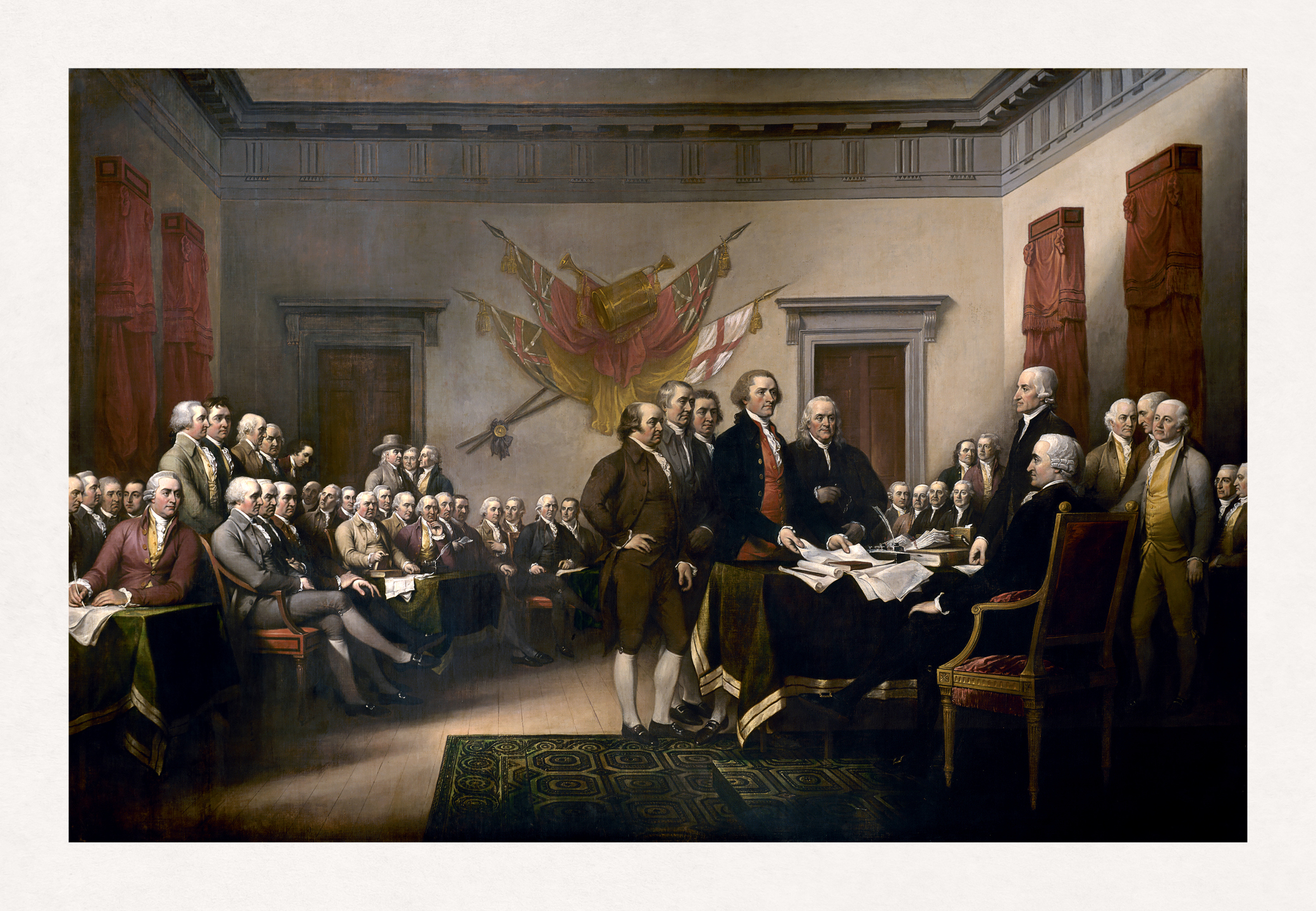
UNESCO cited Independence Hall for its “outstanding universal value” as the place where the Declaration of Independence and the U.S. Constitution were debated and adopted — documents that profoundly influenced democratic movements and lawmakers around the world.
Both were debated in the Pennsylvania State House. “The Declaration of Independence spawned other independence movements that were throwing off monarchies right and left,” Arnold said.
The U.S. Constitution is the oldest continuous written constitution in the world. “It created a whole new way of thinking that if God doesn’t provide, literally, a king for you, if you don’t have that, then who are you accountable for and where do they get their authority if it’s not divine?
“And our founding fathers and mothers said, ‘The authority comes from us, not from a higher power. It comes from us. And if we don’t like how they are handling authority, we can exchange it. So those were really profound things that happened in that building,” Arnold said. “In the United States, we codified our rights and that really was a new thing.”
Jay Nachman is a freelance writer in Philadelphia who tells stories for a variety of clients.