Celebrating the legacy of opera singer Marian Anderson

By Jay Nachman
Visitors to The National Marian Anderson Museum’s Semiquincentennial exhibition, “Marian The American Story,” “will get a dramatic and powerful eye-opening view of Marian Anderson’s life through the lens of our nation,” according to Jillian Patricia Pirtle, the museum’s CEO.
“Marian The American Story” opens on Anderson’s birthday, February 27. Among the artifacts the exhibition will include are performance gowns of Anderson spanning from the 1920s -1990s; the Congressional Medal of Honor, which was presented to her by President Carter in 1977 (Anderson was the first African-American to receive the honor); and letters, performance programs, recordings; and her grandmother’s Bible.
Anderson purchased the house, now a national historic landmark, at 762 South Martin Street in Center City West for $4,000 in 1924.
The Marian Anderson Museum and Historical Society is dedicated to keeping alive the legacy of Marian Anderson, considered one of the most important opera performers of the 20th century, through the display of her home as a museum for tours and education, as well as through the Marian Anderson Scholar Artist Program and Arts Empowerment Program for children.
Anderson, who was born in 1897, joined the junior choir at her Baptist church at six. Before long, she was nicknamed “The Baby Contralto.” When Anderson was 13 years old, she joined the senior choir at church and began visiting other churches after accepting invitations to sing. She became so popular that she sometimes performed at three different places in a single day.
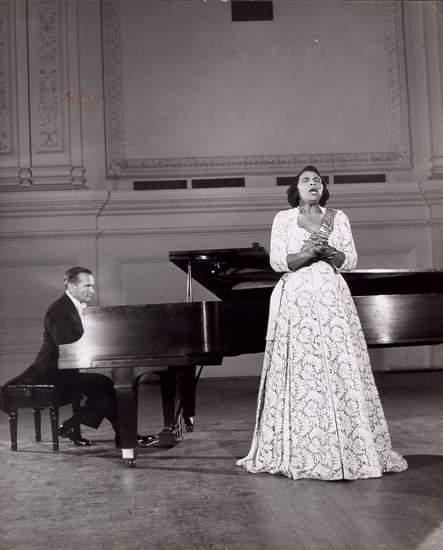
After winning a singing contest through the Philadelphia Philharmonic Society in 1925, she entered the Lewisohn Stadium competition and sang in New York’s amphitheater with the Philharmonic Orchestra accompanying her. On December 30, 1928, she performed a solo recital at Carnegie Hall. A New York Times critic wrote: “A true mezzo-soprano, she encompassed both ranges with full power, expressive feeling, dynamic contrast, and utmost delicacy.”
Anderson began touring the states coast to coast, Europe and Latin America. The most famous event occurred in 1939 when a promoter tried to rent Washington, D.C.’s Constitutional Hall, but was told no dates were available. Washington was segregated and even the hall had segregated seating. In 1935, the hall instituted a only.”
The public was outraged, famous musicians protested, and First Lady Eleanor Roosevelt resigned from the Daughters of the American Revolution, who owned the hall. With the help of the NAACP, a free open-air concert on the steps of the Lincoln Memorial for Easter Sunday was arranged. Anderson sang before 75,000 people.
In 1957, she toured India and the Far East as a goodwill ambassador through the U.S. State Department and the American National Theater and Academy. She traveled 35,000 miles in 12 weeks, giving 24 concerts. After that, President Dwight Eisenhower appointed her as a delegate to the United Nations Human Rights Committee. She sang at his inauguration, as well as John F. Kennedy’s in 1961.
During Anderson’s career, she received many awards, including the Springarn Medal in 1939, given annually to a Black American who “shall have made the highest achievement during the preceding year or years in any honorable field of endeavor.” In 1941, she received the Bok award, given annually to an outstanding Philadelphia citizen. She used the $10,000 prize money to found the Marian Anderson Scholarships. In 1963, President Lyndon Johnson awarded her the American Medal of Freedom. In 1986, President Ronald Reagan presented her with the National Medal of Arts.
Anderson insisted on “vertical” seating in segregated cities, meaning Black audience members would be allotted seats in all parts of the auditorium. Many times, it was the first time Black audience members could sit in the orchestra section. Anderson died of heart disease at age 96. More than 2,000 admirers attended a memorial service at Carnegie Hall.
“Anderson,” said Pirtle “did extraordinary things in a time of extreme oppression and difficulty.” The museum has reopened after a catastrophic flood in 2020 rendered the site inaccessible. The building has been restored. The museum is in the midst of a capital campaign to continue to improve the building and the visitor experience.
The museum is open daily from 10 a.m.- 4 p.m. Monday through Saturday. Reservations are required. For more information, visit marianandersonhistoricalsociety.weebly.com.
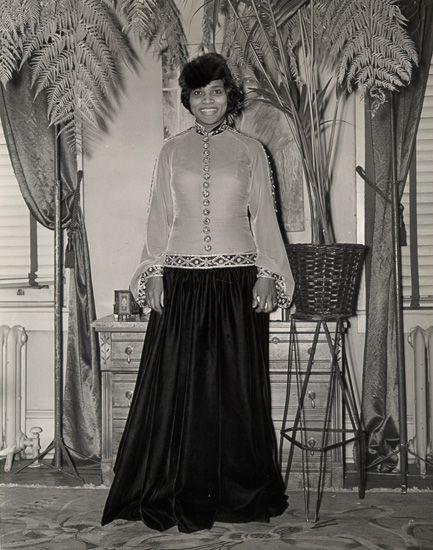
Marian Anderson stands in her home on Martin Street before leaving for her historic Lincoln Memorial performance on April 9, 1939.
Jay Nachman is a freelance writer in Philadelphia who tells stories for a variety of clients.